The SBIR program has restarted.
Agencies are accepting proposals again — and competition will be fierce.

- 30-Day Cohort · For Funded Startups
You Have Done the Technical Work. Now Win the Other Half of the Score.
For SBIR Phase II, Direct to Phase II, and Fast Track proposals, the commercialization plan is not a supporting section. It carries equal weight with your technical plan — meaning it accounts for up to half of your total reviewer score on an award worth $1M to $2M.
$549
$449
Phase II, Direct to Phase II, and Fast Track applicants: this is the section that determines whether your $1M–$2M proposal gets funded.
13
Chapters
86
Lessons
15 yrs
NSF Review
Built by a Ph.D. engineer
15 years of NSF, DOE, and NIH proposal review experience
- The Program
A program designed around
your outcome.
You will build a complete, reviewer-ready SBIR proposal — not just an outline, not just notes. A real, submittable document, built section by section.

Lessons
Daily lessons with clear assignments — one manageable step at a time, designed to work alongside a full schedule.
Day-by-day
Frameworks
Templates for every major proposal section so you start from a proven structure instead of a blank page.
Templates

Guidance
Individual feedback on assignments and pre-recorded video instruction from a former federal grant reviewer.
Feedback
- Why Proposals Fail
What Most Applicants Get Wrong at This Stage
You survived Phase I — or you are bypassing it entirely through Direct to Phase II or Fast Track. Your technology works, or is on its way to working. You know how to write an R&D plan. But Phase II reviewers are evaluating something different — and most applicants underestimate how much it matters.
Who is the specific customer — not a market category, but an actual buyer?
What does the revenue model look like, and is it realistic for this stage?
What happens after the Phase II award — who funds the path to market?
Is there a credible exit strategy, or does this end at the grant?
Why would they choose this technology over what already exists?
This program gives you the structure, frameworks, and guided process to build a commercialization plan that answers every one of those questions with confidence.
- Trust & Track Record
Join 150+ companies from some of the top startups in the U.S.
175+
Deep-tech startups advised
400+
Founders across 10 industries
15 yrs
Reviewing NSF, DOE, NIH proposals
- Curriculum
Thirteen focused modules.One
complete R&D plan
13 chapters · 86 lessons. daily assignments · worksheets · templates · individual feedback.
CH 01
Welcome and Course Overview
Understand what a winning Phase II commercialization plan looks like from a reviewer's perspective — and how it differs from what most applicants submit.
CH 02
Creating Your Plan
Establish the framework and structure for your commercialization plan. Understand what agencies expect at Phase II and how to organize your narrative for maximum reviewer impact.
CH 03
Structuring Your Plan
Build the architecture so every section connects logically — from mission to market to financial strategy to exit. Phase II reviewers read this as a complete story, not a checklist.
CH 04
Creating Your Mission Statement
Develop a mission statement that anchors your commercial narrative and signals to reviewers that your company has a clear, focused direction beyond the grant period.
CH 05
Standing Out From the Crowd
Define your value proposition and unique selling points with precision. Phase II reviewers are asking "why this company, why this technology, why now" — this chapter builds your answer.
CH 06
Credibility and Reputation
At Phase II, reviewers expect evidence that your team can execute commercially — not just technically. Learn how to present credentials, advisors, pilot customers, and partnerships in a way that builds reviewer confidence.
CH 07
Exploiting Markets
Identify and size your target market with the specificity Phase II requires. Move beyond generic industry reports to defined customer segments, early adopters, and beachhead markets with real supporting evidence.
CH 08
Dealing With Competition
Conduct a competitive analysis that shows reviewers you understand the commercial landscape — and that your technology has a position in it that is both differentiated and defensible.
CH 09
Hiring the Right People
Phase II reviewers want to see that your organization can scale commercially as well as technically. Build a team strategy that addresses gaps, identifies key hires, and shows a credible path from R&D team to commercial operation.
CH 10
What Is Your Business Model?
Define how your business will generate revenue after Phase II. Develop a business model that is realistic for your technology stage and clearly tied to your market and customer analysis.
CH 11
Calculating Your Business Financials
Build a financial plan that extends beyond the Phase II award period — including development costs, commercialization investment, revenue projections, and the assumptions behind your numbers.
CH 12
Do You Need Investments or Grants After Phase II?
Phase II reviewers want to know what happens when the grant ends. Evaluate your post-award funding strategy — Phase IIB, venture capital, strategic partners, licensing, or revenue — and communicate it with clarity and credibility.
CH 13
What Is Your Exit Plan?
Define your long-term commercial strategy — acquisition, licensing, strategic partnership, or independent growth — and communicate it in a way that gives reviewers confidence your technology will reach market and generate impact.
- The Process
A focused, six-part delivery model.
01
Step-by-Step Daily Lessons
Follow a clear daily learning path with focused assignments. Progress through each section in the right order for maximum results.
02
Ready-to-Use Plan Templates
Access professionally structured templates for every major section. Build your Phase II commercialization plan faster and with confidence.
03
Expert Video Training
Learn directly from Dr. Spiegel through pre-recorded lessons. Gain practical insights and guidance whenever it fits your schedule.
04
Founder-Friendly Learning
Created specifically for technical founders and innovators. No business school experience is needed to follow and succeed.
05
Personalized Feedback
Receive individual feedback to strengthen your submissions. Improve your work with expert recommendations and direction.
06
Flexible Schedule Design
Advance at your own pace without disrupting your daily commitments. Designed to fit alongside a full workload and busy calendar.
A competitive analysis that shows reviewers you understand the landscape and have a defensible position in it
A credible business model with defined, realistic revenue streams
A financial plan that supports your full commercialization timeline beyond the Phase II award
A funding strategy for what comes after Phase II — whether that is Phase IIB, venture capital, strategic partners, or revenue
A complete exit strategy that gives reviewers confidence in your long-term commercial vision
A plan ready for federal submission, investor review, or both
- What You Will Build
In 30 days, you finish with a complete, reviewer-ready proposal.
A complete, reviewer-ready commercialization plan — structured specifically for Phase II, Direct to Phase II, and Fast Track SBIR and STTR submissions to NSF, NIH, DOE, and other federal agencies.
A mission and vision that frames your commercial opportunity with clarity and conviction
A defined value proposition that differentiates your technology — not just describes it
A market analysis built on real customer segments, not generic TAM numbers from industry reports
- Testimonials
Trusted by founders, scientists, and innovation leaders.
"Colleen provides valuable, constructive feedback. I would definitely use her again and would not hesitate to recommend her."
Shero
"A deep expert, always available to provide guidance, and committed to her client's success. I highly recommend Colleen."
Restore Technology
"Colleen was amazing to work with. She was very supportive of my ideas and business. Invaluable!"
StructureBot
"Her expertise makes her well-suited to provide realistic counsel and helpful guidance. I'll definitely be working with her again."
Fafnir
"Colleen was so great to work with. She just got it and was proactive about making suggestions."
Radiant Labs
"I had a great experience working with Colleen. Extremely knowledgeable and very easy to work with."
OpticSurg
- Your Instructor
A practitioner who has navigated the federal funding ecosystem firsthand.
Dr. Colleen Spiegel, Ph.D. — Founder of Semscio, engineer, grant reviewer, and startup advisor. 15 years reviewing NSF, DOE, and NIH SBIR proposals. Founder of Clean Fuel Cell Energy, a profitable deep-tech manufacturer. Author of technical books with McGraw-Hill and Elsevier.
“I built this program because most grant writing resources are written by people who have never sat on a review panel. This one was not.”
175+
Startups
15 yrs
Reviewing
Ph.D.
Engineering
- Enrollment Open
Everything you need to build a fundable R&D plan in 30 days.
Learn the system used by a Ph.D. engineer and grant reviewer who has advised 175+ deep-tech startups — and knows what separates a credible R&D plan from one that loses funding.
- 13 chapters . Daily lessons
- Pre-recorded video instruction
- Self-paced — fits a full schedule
- Worksheets and templates for every stage of development
- Individual feedback on assignments
- Investor and grant-ready R&D plan by day 30
30-Day Commercialization Plan Challenge
$1,495
Founders rate: $449 $549 · Limited cohort
- 30-day reviewer-ready guarantee
Pick the path that fits where you are now.
- Start Free
Free Founder System
$0
11 free ebooks covering decisions, strategy, execution, and grant proposal structure.
- Most popular
30-Day Challenge
$449
Daily lessons, templates, video instruction, and individual feedback on your proposal.
- The Book Behind the Program
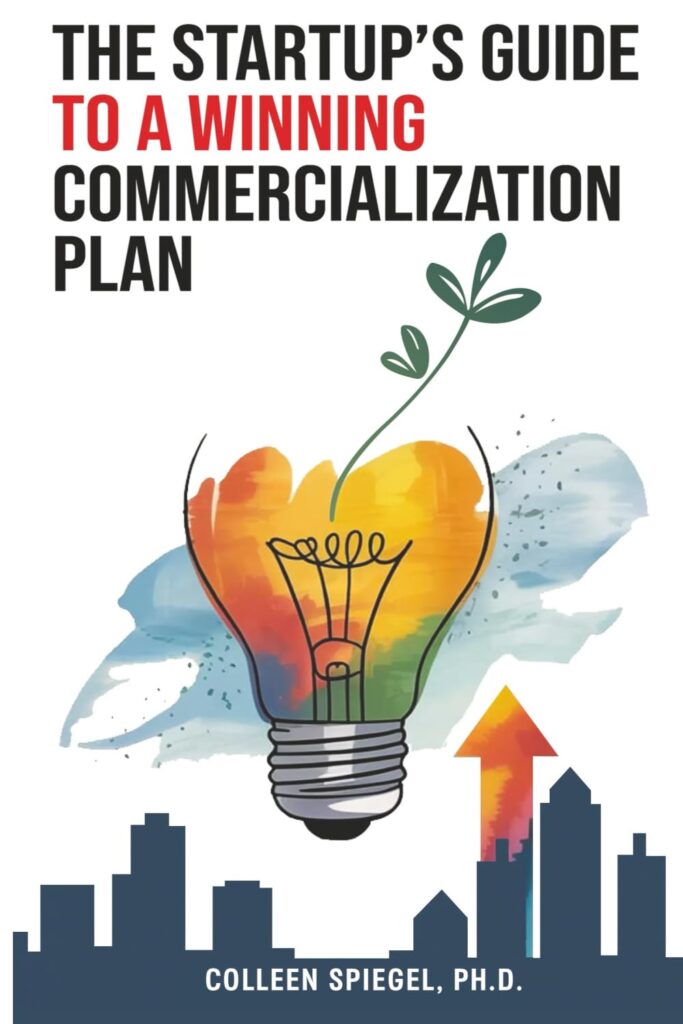
The Startup's Guide to a Winning Commercialization Plan
a practical, step-by-step guide for deep-tech founders who need to build a commercialization plan that survives federal reviewer scrutiny and positions their company for long-term commercial success.
If you want to explore the methodology before enrolling, the book is available in print and digital formats.
- Right Fit
Is this program right for you?
This program is for you if…
- You are preparing a Phase II or Direct to Phase II SBIR or STTR proposal and need a commercialization plan that holds up under serious reviewer scrutiny
- You completed Phase I successfully and now face a proposal where the commercialization plan carries equal weight with your technical work
- You are applying Direct to Phase II and need a commercialization plan strong enough to substitute for a Phase I track record
- You are submitting a Fast Track proposal — combining Phase I and Phase II in a single submission — and need a commercialization plan that satisfies both sets of reviewer expectations simultaneously
- You have strong technical skills but less experience building the commercial narrative, market analysis, and financial strategy that Phase II reviewers evaluate
- You want to build a plan that works for federal submission and for investor or partner conversations — because Phase II applicants increasingly need both
- You want to complete your plan in a structured, accountable format — not circle back to it indefinitely while your submission deadline approaches
This program is not for you if…
- You are a Phase I-only applicant looking for introductory commercialization guidance — the 30-Day Grant Writing Challenge covers commercialization planning as part of the complete Phase I proposal process
- You are looking for someone to write your plan for you (see Advisory services)
- You have not yet validated your technology or defined the problem it solves
- You are not willing to commit 30 days of focused effort
- FAQ
Frequently asked questions
Why is the commercialization plan so heavily weighted at Phase II?
At Phase I, agencies are funding proof of concept — the primary question is whether the technology is feasible. At Phase II, agencies are funding development toward commercialization — the primary question is whether this technology will reach market and generate impact. The commercialization plan is how reviewers answer that question. Equally weighted with the technical plan, it is no longer a supporting section — it is half the evaluation.
What is Direct to Phase II, and why does it require an especially strong commercialization plan?
Direct to Phase II allows companies to skip Phase I and apply directly for Phase II funding — typically $1M to $2M — by demonstrating that their technology has already achieved Phase I feasibility through prior work. Because there is no Phase I track record within the SBIR program, the commercialization plan must work harder to establish credibility. Reviewers are evaluating your commercial readiness without the evidence a completed Phase I would provide.
What is Fast Track, and why is the commercialization plan especially important?
Fast Track allows companies to submit Phase I and Phase II proposals simultaneously as a combined application. If the Phase I work is completed successfully, the Phase II award is expedited — compressing what normally takes years into a single submission cycle. The commercialization plan must satisfy both Phase I and Phase II reviewer expectations in one document. That means demonstrating early-stage commercial thinking for Phase I reviewers while also presenting the fully developed market strategy, business model, and post-award funding plan that Phase II reviewers require. It is the most demanding commercialization writing challenge in the SBIR program — and the one where structured preparation makes the biggest difference.
Is there a book I can read before enrolling?
Yes. The course is built on The Startup’s Guide to a Winning Commercialization Plan by Dr. Spiegel, available on Amazon and as a digital download.
What if I need more than a course?
Advisory services are available for Phase II, Direct to Phase II, and Fast Track applicants who want expert review of their completed commercialization plan or direct guidance at a critical stage. Given the award size, many founders at this stage find direct advisory support a worthwhile investment.
What if I am a Phase I-only applicant?
The 30-Day Grant Writing Challenge includes commercialization planning as part of the complete Phase I proposal process and is the better fit for Phase I applicants.
What if I am not sure I am ready yet?
Start with the Free Founder System. It includes commercialization planning frameworks and will help you assess your readiness — at no cost.
- Ready to Begin?
Ready to build a credible, fundable R&D plan?
A strong R&D plan is the foundation of every winning grant proposal, every investor conversation, and every successful product launch. The founders who build it now are the ones who move faster when funding opportunities open — and reviewers start reading.
- Free Resource
Not Ready to Enroll Today?
Free Founder System — 11 Free Ebooks. Instant Delivery. No Credit Card.
Start with the library that makes the rest of the journey easier.
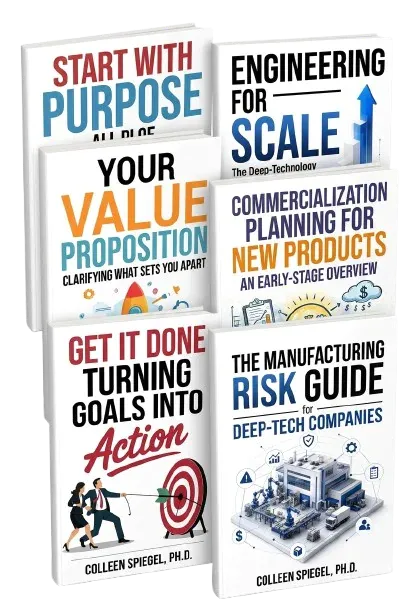
If you are not ready to commit to the full program, start here. The Free Founder System is a library of 11 structured ebooks for technical founders who want to make clearer decisions — on which business to build, how to grow it, and whether to pursue funding.
Free, instant delivery. No credit card.
- What's inside
The library covers the full founder journey
01
- 3 books
Decision-Making
Three books to help you evaluate your readiness, sequence your decisions, and choose the right path before committing time or capital.
02
- 3 books
Strategy
Three books on commercialization planning, value proposition development, and aligning your mission and goals — the same strategic foundations that make an R&D plan credible to reviewers and investors.
03
- 2 books
Execution
Two books on turning plans into action and preparing your technology for manufacturing scale — the operational context your R&D plan needs to feel real.
04
- 3 books
Risk & Funding
Three books on manufacturing risk, pre-acquisition engineering, and winning grant proposals — including how to secure non-dilutive funding without leaving money on the table.
Trusted by 400+ founders across 10 industries.
Free, instant delivery to your inbox. No pitch calls. Unsubscribe any time.
No hype. No fluff. Built for serious builders